Martian Appetite
How a future colony learns to eat without forgetting why we eat at all
31 October 2025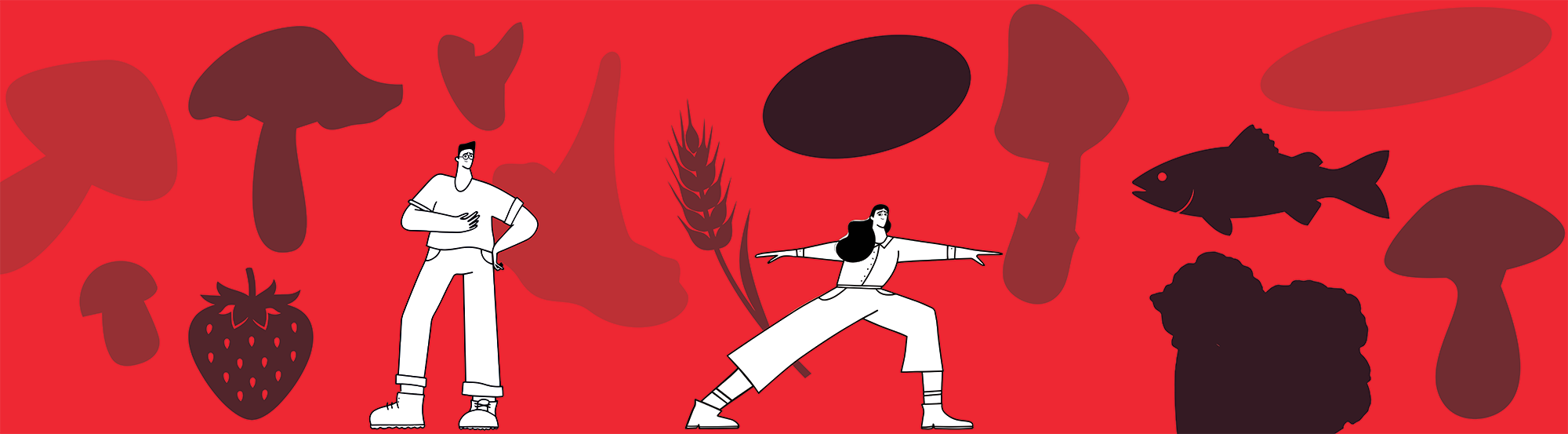
The first thing you notice is not the red dust. Not the silence. Not even the way your body keeps trying to interpret one third gravity as a prank.
It is the smell.
In the habitat’s tiny galley, a warm, earthy steam rises from a sealed pot, carrying that unmistakable mushroom perfume, forest after rain, something ancient and alive. Someone has taped a handwritten menu to the wall with a strip of translucent polymer. The ink has started to feather at the corners where condensation collects.
Breakfast: sweet potato pancakes.
Mid-sol snack: chickpea hummus, microgreens.
Dinner: “oyster mushroom carpaccio” (in quotes, like a dare).
And beneath it, circled twice, as if the whole settlement depends on it:
CHOCOLATE.
You did not fly tens of millions of miles to become sentimental about snack food. But you stand there, staring at that circle, and you understand something that every long mission eventually teaches. Nutrition is not just chemistry. It is morale. It is memory. It is how a community says, we are still human.
When I spoke with Dr. Flávia Fayet-Moore, a nutrition scientist and space nutritionist who goes by “Dr. Flav,” she kept returning to that idea, again and again, with the kind of insistence that comes from watching people suffer when food stops being joyful. “Food is life,” she told me. “Food is medicine, food is culture, food is delicious. And food is that social connection.” On Mars, where everything costs something, even a spoonful of olive oil, that truth stops being poetic and starts becoming operational.
Food is the longest relationship
Dr. Flav’s story begins where many people’s stories begin, in a kitchen, with a child doing something slightly forbidden and entirely human: making a mess in pursuit of curiosity. “When I was little, I loved experimenting with food,” she said, remembering concoctions that sound like childhood alchemy, cocoa powder and condensed milk, frozen into a hopeful sludge. She wanted an Easy-Bake toy oven. Her mother refused and offered something better, the real kitchen, the real heat, the real stakes. “It was a blessing because I did learn how to experiment with different recipes and how to cook.”
That origin matters because it frames her central claim about nutrition. It is not a niche interest for people who like reading labels. It is the most enduring relationship we have. “Everyone has to eat,” she said, and then she landed the line that feels obvious until you really sit with it. “It’s one thing in life from the day you’re born to the day you die. It’s the longest relationship we’ll ever have.”
On Earth, it is possible to treat that relationship carelessly for a long time. We survive, even when we do not thrive. We can ignore micronutrient deficiencies, pretend our fatigue is just adulthood, outsource our dinners to a neon-lit aisle of processed comfort and call it modern life. But space removes the illusion. It compresses consequences. It turns “eventually” into “soon.”
“Everyone has to eat. So it’s one thing in life from the day you’re born to the day you die. It’s the longest relationship we’ll ever have.”
That compression is one reason Dr. Flav ended up drawn to space nutrition in the first place. “The frustration on Earth led me to space,” she explained. In her research, she kept finding deficiency where you would not expect it, “apparently healthy females,” low in iron, B12, folate, selenium, zinc. Later, newer population research pointed in the same direction. The specifics can vary by cohort and country, but her point is stable: the modern food environment can produce bodies that look fine while quietly running short on essentials.
Space does not let you look fine.
Space forces you to build a food system that actually works.
“And on Earth, you can,” she said, meaning you can ignore nutrition, because the consequences are often delayed, subtle, distributed across decades. “Because we still survive. We’re not thriving.” On Mars, the margin between those two words collapses.
Nutrition is a young science with some growing pains
One of the strangest things Dr. Flav reminded me is that nutrition science is still, in the grand timeline of human inquiry, a teenager. “Nutrition science as a field really evolved about a hundred years ago,” she said. “Unlike medicine that’s been around for thousands of years, like the first vitamin… vitamin C was isolated less than a hundred years ago.”
It is unsettling to realize how recently we identified the building blocks of what keeps us alive. Even the origin story of vitamins has an almost comic randomness to it. Dr. Flav told it through beriberi, a disease once described for centuries, producing paralysis, baffling doctors who were locked into the germ theory of everything. “It was discovered by chance,” she said, explaining how a lab in the Dutch East Indies ran out of white rice for their animal models and switched to brown rice. The animals recovered. The cure had been sitting in the husk. The first vitamin, B1, earned its nickname in a way that still feels like a science joke: “Vitamin B is B for berry berry.”
That history matters because it should humble us. If we have only been doing this for a century, and if we are already moving beyond deficiency into bioactive compounds, food synergies, and the “food matrix,” then Mars becomes less a destination and more an accelerator. It is the place where the hidden parts of nutrition become loud.
Dr. Flav described the shift in the field from preventing classic deficiencies to understanding that food contains far more than macro nutrients and the famous vitamins. “We know that there is bioactive compounds,” she said. “These are the compounds that have all those properties you hear about, you know, like antioxidant, anti-inflammatory… These are all properties that it’s the bioactives that are very much driving that effect in food.”
And it is not just a few exotic molecules. “There’s more than 10,000 known plant compounds that are bioactive in our food supply,” she told me, and the research is still thin compared to the scale of the system. She mentioned ergothioneine, a compound associated with mushrooms that the body seems built to use. “We have specific receptor in the body that attaches to it,” she said. “So we definitely need it.”
Mars will not care that we are still catching up.
Gravity changes the gut, and the gut changes everything
When people imagine nutrition in space, they often imagine packaged meals and maybe a few salad leaves floating in a spherical droplet of water. The deeper reality is that space reaches into the body and changes the machinery that turns food into you.
Dr. Flav described the digestive tract with the kind of blunt clarity that makes you laugh and then think. It runs “from mouth to anus, not uranus, anus.” And it is, she emphasized, a muscular system that relies on movement and pressure and a choreography of fluids we rarely notice on Earth. In space, those fluid shifts rearrange the body’s internal landscape.
“There’s clear changes that happens in the gut,” she said, including changes in the villi, “the fingerlike projections that help absorb nutrients.” In microgravity, “they change, they’re not as long as they are on earth.” When the surfaces that absorb nutrients change shape, “all these micro changes… will affect how humans and astronauts can absorb their nutrients.”
Mars adds a twist. It is not microgravity. It is not Earth. It is an in-between that has never shaped a human body over decades. One third gravity changes how your metabolism behaves, how your gut behaves, how food behaves. It changes the requirements we have learned to treat as fixed.
On Earth, we can say: for a person of this age, this life stage, this activity level, you need X. On Mars, Dr. Flav said, “we have to figure out what that X is.”
That sentence is deceptively simple. It implies a future where every colony becomes, in part, a living lab, not in a sinister way, but in the way any isolated system must become its own source of truth. It is not just that the settlers will eat differently. They will need to discover what “enough” means in a new physics.
“Space forces us to take nutrition into account. It forces us to create a food system that is nutritious, that it’s tasty, and that is sustainable.”
The appetite problem nobody wants to headline
If there is a single problem in this conversation that deserves a billboard, it is not protein or hydroponics or whether we can grow strawberries under LED arrays.
It is appetite.
“A hundred percent calories will come into play in more way than you probably imagine,” Dr. Flav told me. People tend to assume the caloric question is about activity and weight. In space it becomes existential. Astronauts exercise for hours a day to protect bone and muscle. “On the ISS it’s two and a half hours of exercise every day,” she said. Try doing that while eating too little and you begin to disappear.
The uncomfortable reality is that many astronauts do eat too little. Not because they are careless. Because the environment messes with taste, smell, texture, mood, routine. “Astronauts get anorexia,” she said, clarifying that she meant loss of appetite, not anorexia nervosa. “They have anywhere between 20, sometimes even 30% less calories than their body actually needs.”
If you are in low Earth orbit, you can come home, “regroup and get it all back.” On a Mars mission, by the time you arrive, the deficit can become a cascade.
Why does appetite collapse? Dr. Flav ticked through reasons that sound mundane until you picture them as your everyday life. Fluid shifts can make you feel like you have a constant head cold, dulling taste. Noise matters, too. “The ISS is noisy,” she said. “Sound impacts our taste buds as well.” There is also dryness, altered humidity, and the strange ways our bodies interpret a world without familiar cues.
Astronauts crave intensity because intensity gets through. “That’s why astronauts love like spicy sauce, sriracha, chili,” she said. But then the obvious fix, salt, creates new problems. “Having too much salt will increase their blood pressure… and also exacerbate the bone loss.”
So you restrict salt. You dull flavor. You make eating less rewarding. People eat less. They lose weight. They miss micronutrients. Their bodies struggle to repair. Their mood drops. Their appetite drops further. A loop closes.
This is why “we don’t even have a space food roadmap beyond 2030,” as she put it, feels like more than a bureaucratic gap. It feels like a philosophical one. We have treated food as an accessory problem. On Mars it becomes the mission.
The closed-loop kitchen: nothing leaves, everything returns
One of the more haunting lines Dr. Flav dropped was almost casual. “Every atom you send to space will stay in space.”
On Earth, waste is a place we push things to, out of sight, over there. On Mars, waste is a resource you cannot afford to lose. Water is recycled on the ISS at astonishing rates, “97%,” she said, but even that leaves a “3% resupply required.” Mars will not tolerate a steady leak.
The Martian habitat has to become bioregenerative. “The water and the waste and the food all need to be working within the same system,” she said. “We don’t have the system yet, so that system needs to be developed.”
This is where nutrition stops being a menu and becomes infrastructure.
Food waste, human waste, packaging, even worn textiles, all become potential inputs to the next cycle. In a place where resupply is slow, limited, and expensive, food is not merely eaten. It is managed like air.
And then there is time. Food is not just shipped. It is pre-sent. It waits. Vitamins degrade. Fats oxidize. Oils go rancid. “Everyone knows if you have olive oil… that you’ve left open for too long, it goes bad,” she said. That basic kitchen truth becomes a multi-year engineering challenge when you are storing fats for a journey that includes months in transit, months on Mars, months back.
She said it plainly: “We need foods that last a long time, that are nutritious.” And then the quiet terror beneath it: “We need to ensure that the nutrient content is there all the way back to when they come back to Earth.”
Nobody wants to imagine a crew returning with a deficiency disease that history supposedly solved. But Dr. Flav invoked it for a reason. The risk is not theoretical. If you do not plan for nutrition as a system, you can regress.
The nutrients Mars will try to steal from us
Mars does not steal everything equally. Some nutrients are simply harder to source without animals, without sun, without oceans.
Dr. Flav’s shortlist was crisp.
Vitamin D. Vitamin B12. Long-chain omega-3s, especially DHA.
Vitamin D is the headline because on Earth we manufacture it with our skin in sunlight. On Mars, inside radiation-shielded habitats and suits, that pathway collapses. Supplements are one answer, but Dr. Flav pointed out how fragile that solution becomes when you rely on pre-sent supplies. Many vitamin D supplements are derived from lanolin, the wax in sheep’s wool, and “the supplements generally don’t last more than two years.” The colony needs a better plan than “pack more pills.”
Her favorite alternative is wonderfully specific: mushrooms. “Mushrooms, just like us humans, have this natural ability to make vitamin D,” she said. With UV lamps in a Martian farm, “you put them in the sun or UV light… and they’ll make the vitamin D that’s required.” She even offered an almost charmingly practical conversion. To match the 1,000 IU supplement astronauts take now, it is “about three mushrooms.”
Mushrooms matter beyond the molecule. “When you get vitamin D from mushrooms,” she said, “you’re getting that ergothione… you’re getting the folate, you’re getting the selenium.” You also get something no pill provides: an eating occasion, a texture, a ritual, a reason to gather.
Vitamin B12 is the other great constraint, mostly associated with animal foods on Earth. On Mars it likely comes from microbes, fermentation, and fortification. Dr. Flav mentioned “bacteria that can produce it, precision fermentation potentially.” This is where the colony’s food system begins to resemble a brewery, a lab, and a garden woven together.
Omega-3s, especially DHA, are an even stranger case because on Earth we tend to think “fish,” but fish are just the middlemen. The origin is algae. “When we eat fish, it’s bioaccumulated… from algal sources,” she said. Which means a Mars colony trying to preserve brain health may end up cultivating algae not as a futuristic gimmick, but as a neurological necessity.
She offered a detail that sticks. “Twenty percent of the fat in our brain is that single fat type,” DHA. If you cannot supply it, you are not just risking a number on a lab report. You are risking cognition in the harshest environment humans have ever tried to inhabit.
And fats, she warned, are fragile. They oxidize. They go off. Mars is a place of radiation, a place that pushes oxidative stress upward. The colony will need antioxidant-rich foods, protective packaging, and perhaps entirely new approaches to stabilizing delicate lipids.
In other words, the Martian diet is not just “plants, but more.” It is plants, plus fungi, plus microbes, plus carefully engineered resilience.
“Food is life, right? Food is medicine, food is culture, food is delicious. And food is that social connection.”
Four kingdoms, one table
When Dr. Flav imagines a realistic Martian menu, she keeps returning to “the four food kingdoms of biology.” Plants, fungi, algae, and animals, with a twist.
The plants are familiar: lettuce, tomatoes, mustard greens, microgreens. “Salad will be on the menu,” she said, with the breezy confidence of someone who has watched salad become the first proof of life in controlled environments.
But Mars cannot live on salad alone. So she starts layering.
She mentioned chickpeas and sweet potatoes that have already been flown as seeds, and she pictured the colony turning them into comfort. “Sweet potato pancakes maybe in the morning,” she said, “and some hummus to snack on during the day,” and maybe “some sort of chickpea stew for dinner.”
Then the insistence returns: joy. “I definitely think we’ll have some pre-packaged chocolate,” she said. Not as a guilty indulgence, but as a psychological countermeasure. She recalled arguing with other nutritionists while modeling pantry planning for catastrophe. They were reluctant to include chocolate because it displaced other nutrients. She and her professor pushed back. “We got to have chocolate,” she said. “It’s a pandemic. It’s a catastrophe.”
A Mars mission is not a pandemic. But it shares one essential trait: you cannot brute-force morale.
Fungi are her star. “Oyster mushrooms,” she said with something like delight. She even dressed them up: “Maybe some oyster mushroom carpaccio with some nice spices.” If Mars is ever going to feel like a place people live rather than a place people endure, it will be because someone cared enough to make mushrooms feel celebratory.
The animal component is where the conversation becomes culturally revealing. Dr. Flav did not imagine a colony of cattle ranchers. She imagined insects. Efficient, fast-breeding, compact. Nutrient dense. “Insects are… super nutritious,” she said. “It’s a great protein source, but also micronutrient source.” B12 might come from insects. Protein certainly could. The “ick” factor is not a biological problem. It is a storytelling and processing problem.
Which is why she emphasized form. Not whole crickets on a plate, necessarily, but “insect powder that’s used in some sort of smoothie or, you know, pancake.” The colony will not just learn new foods. It will learn new ways of pretending they are old foods, until they become normal.
And algae and seaweed, she suggested, could help cover fatty acid gaps, though they bring their own complexities, an aquaculture system, water management, different infrastructure. Still, in a world where DHA might be worth its weight in gold, algae farms begin to feel less like sci-fi and more like a clinic.
There is a curious overlap here with another question future colonies will face: pets. In our earlier “Pets on Mars” conversations, fish emerged as strangely practical companions because they are not only calming to watch but potentially useful as part of a food system. If algae and aquaculture become critical for nutrition, the line between “pet,” “farm,” and “ecosystem component” gets blurry fast. The future has a way of making our categories feel quaint.
Why you cannot live on a brick, even if it is perfectly engineered
At some point in any Mars nutrition conversation, someone tries to simplify it into a single object. The ultimate efficiency fantasy: a complete food brick. Add hot sauce. Repeat forever.
I asked Dr. Flav a version of that question. Could we just pack everything into one perfect ration and stop romanticizing meals?
“I don’t think we can, unfortunately,” she said.
Not because it is chemically impossible. Meal replacements exist. But humans are not just nutrient processors. We are variety-seeking creatures for reasons that go deeper than preference.
“If we don’t have the variety, we get food fatigue,” she explained. “The more variety, the more we eat.” She compared it to the buffet effect, how variety draws us forward with a kind of instinctive hunger for nutritional breadth. It is not only culture. It is biology.
She connected that to the limits of monotony in extreme environments. She brought up military rations and the practical policy reality that even on Earth, in structured systems, there is a known ceiling for living on packaged sameness. On a Mars mission, where travel alone takes months, you do not have the luxury of hoping discipline will override appetite forever.
And then she said the part that felt like a mission requirement disguised as a punchline. If you do not make food genuinely edible, “by default, we’ll just revert to a nut. I’m just going to lose my appetite and then I’ll die, because I’m not eating it.”
That is the dark core of the problem. It is not that we cannot pack calories. It is that we cannot pack desire.
Spices, noise, and the birth of Martian cuisine
If Mars has a cuisine, it will not begin with a chef. It will begin with a bored engineer and a limited pantry.
Dr. Flav described how astronauts already do this on the ISS, assembling recipes out of what they have, mixing national food traditions, turning standardized rations into something personal. “One of the things we know that astronauts do is create their own recipes from the existing foods that they’re given,” she said. The improvisation is partly to fight monotony, partly to reclaim agency, partly to make the environment feel like home.
On Mars, that improvisation becomes culture.
I asked if Martian food might develop a recognizable signature, the way certain cuisines on Earth are associated with spice, smoke, sourness, heat.
“I think 100%,” she said. “That’s how food culture evolves.” The colony will take its constraints and build rituals around them. Perhaps the flavors will be bolder because taste is dulled by physiology and environment. Perhaps the spices will be treasured because they do so much work for so little mass. Perhaps there will be “extra spicy Martian meatballs,” she joked, “made of mushrooms… and insect powder.”
It is funny, and it is also true in a deeper way. Mars cuisine will not be defined by terroir, not at first, but by system design. What grows well. What stores well. What boosts appetite. What stabilizes mood. What helps bone retention. What limits oxidative damage. What can be fermented. What can be made communal.
Even the idea of “regolith salt,” that playful thought of a dusty Martian savor, hints at something real. Humans adapt. We turn constraints into identity. We make meaning out of limitation because meaning is how we keep going.
The future of nutrition is not a novelty factory
When I asked Dr. Flav what emerging technologies excite her most, she surprised me by refusing the expected answer.
“What’s funny,” she said, “because the emerging technologies in nutrition don’t excite me. Can I admit that?”
She wasn’t rejecting innovation. She was rejecting a particular kind of innovation, the kind that isolates nutrients and sells them back to us as if food were a spreadsheet.
She described the reductionist trap: protein bars, fiber as a gimmick, single-nutrient obsession. “Food isn’t just nutrients, it’s so much more,” she said. She wants technology that makes real nutrition accessible without stripping away the matrix that makes it work.
“How do we make legumes sexy?” she asked, with a laugh that carried a serious point. Beans, she noted, are already a powerhouse. The question is not whether we can invent a new synthetic meal. It is whether we can build systems that help people eat what already works, consistently, culturally, joyfully.
For Mars, that is a crucial stance. The colony cannot afford a nutrition trend cycle. It cannot pivot every six months to a new diet philosophy. It has to build a food system that is stable, resilient, and psychologically sustainable.
It has to make the healthy choice the easy choice because on Mars the alternative is not guilt, it is breakdown.
Personalized nutrition: the Mars advantage
If one “future tech” does matter, Dr. Flav believes it is personalization. Not as a lifestyle luxury, but as a foundational tool.
She has been in this world for a long time. In her undergrad years, she took what she described as the first nutrigenomics course offered globally. She has watched genetics move from frontier to tool. And she argues we already know enough to start tailoring diets meaningfully.
“There is so much evidence that already exists on how we can tailor our diets based on our genetics,” she said. And the psychological side matters, too. “The research shows that if you know your genetic profile when it comes to nutrition… you’re more motivated to actually follow them.”
She offered a concrete example: genes associated with salt sensitivity and blood pressure. If you know you are at higher risk, you cut salt because it is no longer abstract advice. It is personal physics.
On Mars, personalization could become standard, not because the colony is obsessed with optimization, but because mistakes are expensive. If you have a crew with known risks, known metabolic constraints, known nutrient needs, you can design the food system to support them proactively rather than reactively. You can allocate scarce resources with more precision.
“We need a lot more research in this area because at the end of the day, if we’re sending humans, they’re gonna eat multiple times a day.”
Dr. Flav pointed out that we already do a version of this for newborns on Earth. The PKU test, given to babies globally, is effectively a nutrigenetic intervention. It identifies an inborn metabolic condition and prevents harm by adjusting diet. That is personalized nutrition at its most literal.
She imagines a future where “everyone’s born knowing if they’re salt-sensitive, if they metabolize caffeine really well, if they need extra vitamin B12 or extra iron.” On Earth, that could help prevention. On Mars, it could help survival.
The real reason Martian nutrition matters
It is tempting to treat Mars as a special case, a weird edge scenario. But Dr. Flav kept flipping the perspective. Space nutrition is not only about Mars. It is a mirror held up to Earth.
Space “forces us to take nutrition into account,” she said, and in doing so it reveals how casually we treat it here. It forces us to design for nutrient density, stability, taste, morale, sustainability, and closed-loop efficiency all at once. That is not just a Mars challenge. That is the future of Earth’s food system too, whether we admit it or not.
Dr. Flav’s motivation is grounded in something both intimate and global. She talked about doing “purpose work,” asking herself why she wakes up to do this every day. “For me, it was really about using food to improve human health,” she said. She is “gobsmacked” that we do not teach nutrition formally, that parents are not supported more robustly, that pregnancy nutrition is not treated as the profound shaping force it is. “The first taste exposure happens in utero,” she reminded me. “Whatever your mother ate started forming your taste preferences before you were even a baby.”
Mars forces us to take that seriously.
If you are going to build a new society, you do not get to pretend food is just fuel. The first children born on Mars will inherit not only the genes of Earth but the food system of the habitat. Their preferences, microbiomes, and health trajectories will be shaped by what we choose to grow, ferment, fortify, and celebrate.
So the “future of nutrition on Mars” is not really a question about what astronauts eat out of pouches. It is a question about what kind of people we become when we cannot hide from the consequences of our choices.
Signal Received
Dr. Flav came into this conversation with a scientist’s precision and a human’s stubborn insistence that joy is not optional. Her core argument is simple and difficult: nutrition is a system, not a supplement. Space makes that obvious because it collapses the delay between cause and effect. Reduced gravity alters digestion and absorption. Radiation raises oxidative stress. Appetite drops, taste dulls, and under-eating becomes a real threat, not a minor inconvenience. If we do not solve the “tasty, varied, stable” food problem, Mars becomes a place where people slowly fade.
At the same time, she offered a believable picture of what a Martian menu could actually look like: plants for freshness and fiber, fungi for resilience and vitamin D through UV-exposed mushrooms, microbes and fermentation to replace nutrients we normally get from animals, algae as the original source of brain-critical omega-3s, and insects as a compact, culturally adaptable animal protein. Not a perfect brick. A real table. A real culture, emerging from constraint.
And maybe that is the real takeaway. Mars will not be saved by one breakthrough ingredient or one clever package. It will be saved by the ordinary, daily act of feeding each other well, in a place where “well” has to mean something measurable and something felt. In the end, the question is not only what we will eat on Mars. It is whether we will remember why we eat together at all. *
Adapted from Joe Sweeney’s interview with Dr. Flávia Fayet-Moore for the Aspiring Martians: Everyday Mars episode of "Food on Mars" on 28 October 2025