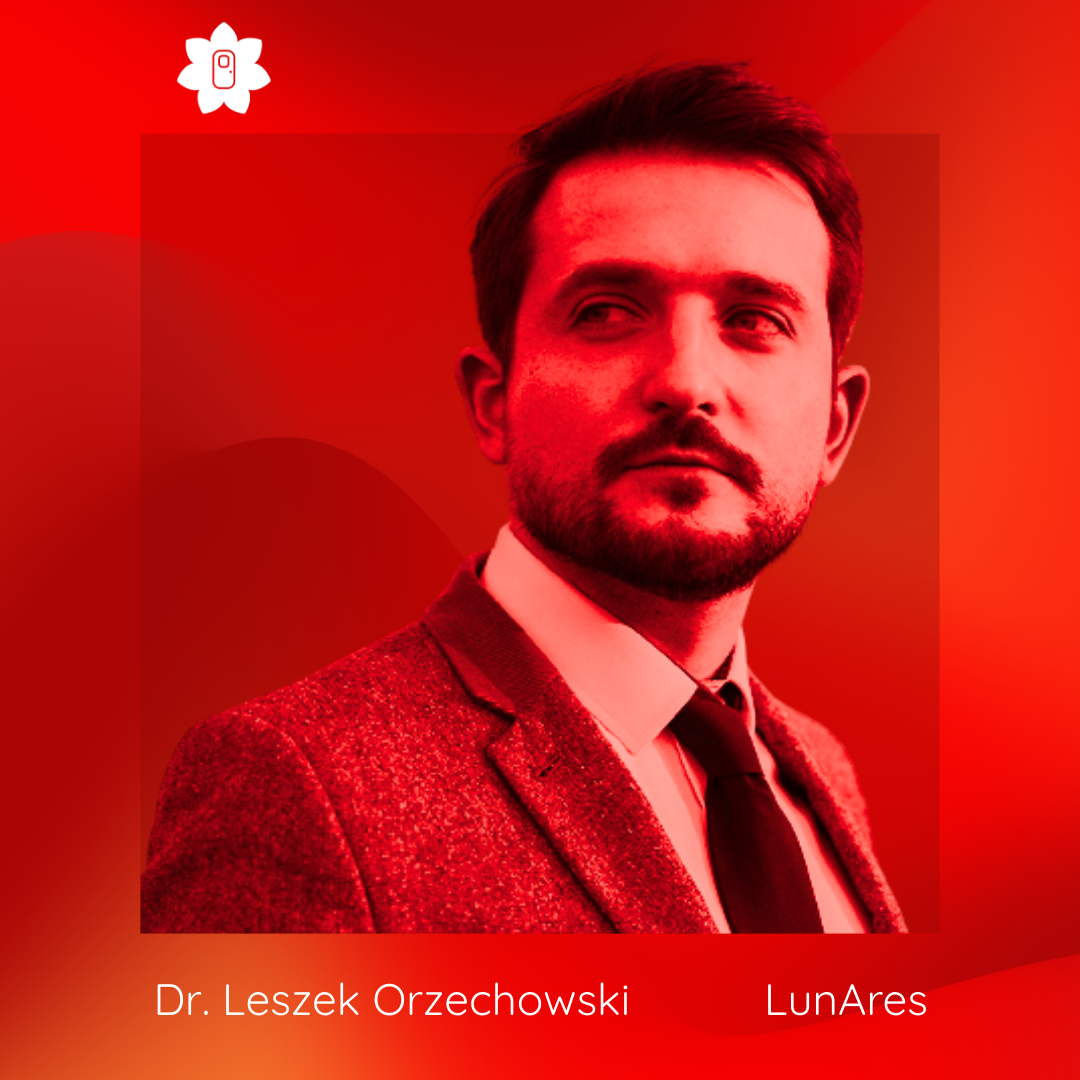
Inside LunAres Research Station with Dr. Leszek Orzechowski
This month on Inside the Habitat, we step inside one of Europe’s most respected analog research facilities: LunAres Research Station in Poland.
Founded in 2017 and located inside a former post-military airport hangar, LunAres has become a globally recognized platform for human spaceflight research. The station runs 10–12 analog missions per year, hosts crews of four to eight participants, and has supported more than 65 scientific experiments across over 40 missions. Its work spans space medicine, psychology, biotechnology, robotics, human factors, and sustainable living systems. It also serves as a mirror platform for ESA-funded research connected to Poland’s upcoming IGNIS mission to the International Space Station.
But LunAres doesn’t rely on natural deserts or volcanic terrain. Instead, it specializes in something arguably more difficult: controlled isolation.
Inside a reinforced concrete hangar with no windows, crews simulate lunar and Martian missions under tightly managed environmental conditions. Communication delays mimic Mars. Artificial day-night cycles shift for lunar darkness or Martian drift. Water is strictly rationed. Gray water from showers flushes toilets. Bedrooms are capsule-sized. Hydroponic plants double as morale boosters. EVA operations take place on a 250-square-meter basalt-and-sand terrain accessed through a functional airlock.
In this episode, Dr. Leszek Orzechowski shares how LunAres was born out of an ESA design competition, the steep early learning curve of running analog missions, how nearly 300 participants have navigated isolation inside the habitat, and what it means to simulate Moon and Mars missions in an urban yet sealed environment.
We discuss crew selection, mission control oversight, communication delays, lunar versus Martian simulation differences, participation in the World’s Biggest Analog initiative, ESA-linked neuro studies, collaboration with aerospace agencies, and the surprising psychological power of growing plants in confinement.
If we’re serious about settling other worlds, places like LunAres are where we learn how humans actually behave when the hatch closes.